
NEWS
Iran Sparks Global Reactions After Rejecting Temporary Ceasefire, Demands Full End to War

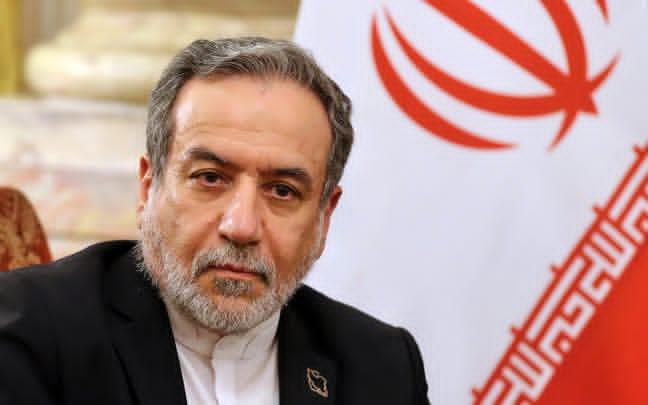
Iran is once again at the center of global attention after a recent statement from its foreign ministry sparked widespread reactions across political and social spaces.
At the heart of the situation is a growing disagreement over how the ongoing conflict should be handled — and more specifically, whether a temporary ceasefire is enough.
According to officials, it isn’t.
In a firm and direct stance, Iran has rejected the idea of a short-term ceasefire, arguing that such a move would not truly resolve the situation. Instead, they claim it would only allow what they describe as ongoing “crimes” to continue under a different form.
That statement alone has been enough to trigger strong reactions.
Because it shifts the conversation entirely.
Rather than accepting a pause in fighting as a first step toward peace, Iran is calling for something much bigger — a complete and permanent end to the war.
No temporary solutions.
No partial agreements.
Just a full stop.
And that “all or nothing” approach is what’s driving global attention right now.
For many observers, temporary ceasefires are often seen as the beginning of a longer peace process. They provide a window for negotiations, humanitarian aid, and a chance to reduce immediate tensions.
But Iran’s position challenges that idea.
From their perspective, a pause without a full resolution could create room for the conflict to continue in different ways, potentially prolonging the situation rather than ending it.
That argument has divided opinions.
Some believe the stance is understandable. They argue that without addressing the root causes of the conflict, a temporary ceasefire may only delay the inevitable, rather than solve anything permanently.
Others see it differently.
They believe rejecting a ceasefire could make it harder to reach any form of agreement at all, especially in situations where trust between parties is already limited.
That contrast in viewpoints is what’s fueling the conversation.
Social media has amplified the situation quickly, with people from around the world sharing their thoughts. Some are analyzing the political implications, while others are reacting more emotionally to the idea of continued conflict without a pause.
That mix of logic and emotion is what keeps the topic trending.
Another reason this moment is gaining so much traction is the broader context surrounding the situation. Efforts have been ongoing to find a path toward reducing tensions, with different parties proposing solutions that could lead to negotiations.
A temporary ceasefire was widely seen as one of those steps.
So rejecting it changes the direction of the conversation.
It raises new questions.
And it creates uncertainty.
What happens next?
That’s the question many are now asking.
Without a temporary agreement in place, the path forward becomes less clear. Negotiations may still continue, but the absence of an initial pause makes the situation more complex.
And complexity often leads to more speculation.
Some observers believe this stance could be a strategic move, a way of applying pressure to ensure that any agreement reached is more comprehensive. By refusing partial measures, Iran may be signaling that it wants stronger guarantees before agreeing to anything.
Others, however, worry about the risks.
They point out that without even a temporary break in hostilities, the human and political costs of the conflict could continue to rise. For them, even a short pause is valuable if it can create space for dialogue.
That difference in perspective highlights the challenge of resolving conflicts like this.
There is rarely a simple solution.
Every option comes with trade-offs.
And every decision carries consequences.
At the same time, the situation reflects a larger reality about international negotiations. Different parties often have different priorities, and aligning those priorities is one of the hardest parts of reaching an agreement.
What one side sees as a necessary step, another may see as insufficient.
And that’s exactly what’s happening here.
Iran’s rejection of a temporary ceasefire doesn’t just impact immediate discussions — it also influences how future negotiations may unfold. It sets a tone, defines expectations, and signals how far one side is willing to go.
That’s why people are paying attention.
Because moments like this can shape what comes next.
As reactions continue to pour in, the conversation is expanding beyond political circles. Everyday observers are engaging with the topic, sharing opinions, and trying to make sense of what it all means.
Some are focused on the bigger picture.
Others are looking at the immediate impact.
But everyone is asking the same underlying question:
Is this the right approach?
That question doesn’t have a simple answer.
And that’s what makes the situation so compelling.
It’s not just about a statement.
It’s about what that statement represents.
A shift in strategy.
A challenge to existing proposals.
And a clear message that partial solutions may not be enough.
For now, the situation remains uncertain.
Negotiations are ongoing.
Reactions are still coming in.
And the global conversation continues to evolve.
But one thing is clear:
Iran’s stance has changed the tone of the discussion.
And what happens next could determine the direction of the conflict moving forward.

Serena Williams Stuns Fans With Incredible Body Transformation

Serena Williams Sparks Confusion After New Update Leaves Fans Questioning Her Comeback

Elon Musk Drops New Insight on Technology, Sparking Global Reactions

Serena Williams’ Simple Beach Question Sparks Deep and Emotional Reactions From Fans

Serena Williams Turns Heads on the Beach, Sparking Reactions From Fans

Iran Sparks Global Reactions After Rejecting Temporary Ceasefire, Demands Full End to War

Taylor Swift and Travis Kelce Spark Emotional Reactions After Recent Moment

Serena Williams Sparks Deep Reactions With Bold New Look

Fans Are Excited After Serena Williams Announces New Move, Sparking Widespread Speculation

Serena Williams Shares New Photoshoot Pictures, Sparking Massive Reactions

Taylor Swift and Travis Kelce Spark Reactions as New Wedding Details Emerge
